About ICAK
The original professional organization for Applied Kinesiology.
Founded 1964 by Dr George Goodheart, DC
The International College of Applied Kinesiology represents the interests of its member chapters in countries across the world — including the USA, Canada, Australia, New Zealand, Brazil, the UK, Germany, France, Italy, Russia, Ukraine, the Baltic states and the Netherlands — supporting and promoting scientific and clinically based Applied Kinesiology.
What's the ICAK?
A worldwide organization of licensed practitioners
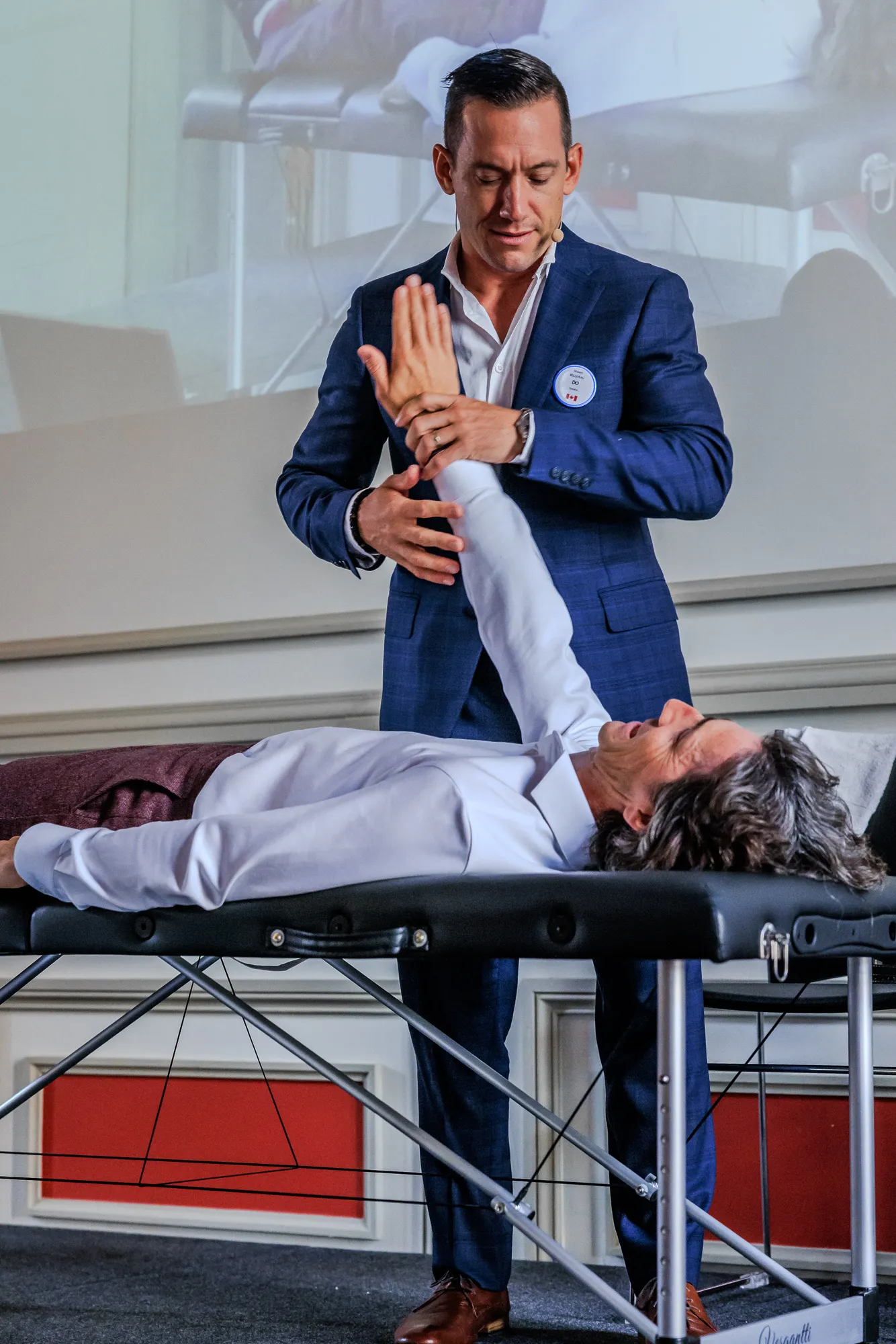
ICAK is the original professional organization founded by Dr George Goodheart, DC. It supports and promotes scientific and clinically based Applied Kinesiology (AK), a valuable diagnostic technique utilising the manual muscle test that is used by a wide cross-section of licensed healthcare professionals worldwide — including doctors of chiropractic, osteopathy, medicine and dentistry. ICAK is responsible for the education, ethical standards and certification of the global community of Applied Kinesiology practitioners.
Applied Kinesiology is a safe and non-invasive diagnostic system using muscle testing as a tool for evaluating neurological function. Only doctors and healthcare practitioners regulated by local licensing bodies to diagnose can be certified to include Applied Kinesiology in their patient care. The methodology focuses primarily on neuromuscular function as it relates to the structural, chemical and neurological regulatory systems of the body — helping AK practitioners identify areas of dysfunction in the delicate interplay of the sensory and motor systems.
ICAK's organisational structure is headed by the International Council, made up of representatives from each member chapter, and specific boards tasked with maintaining the highest standards in education, research and examination.
Our founder
Dr George Goodheart, DC — 1964
The origin of contemporary Applied Kinesiology traces to 1964, when Dr George G. Goodheart Jr, DC first observed that, in the absence of congenital or pathologic anomaly, postural distortion is often associated with muscles that fail to meet the demands of muscle tests designed to maximally isolate specific muscles. Digital manipulation of the tender nodules he found within those muscles improved both postural balance and the outcome of manual muscle tests.
Dr Goodheart and others have since observed that many conservative treatment methods — joint manipulation and mobilisation, myofascial therapies, cranial techniques, meridian therapy, clinical nutrition, dietary management and reflex procedures — improve neuromuscular function as perceived by manual muscle testing. That body of work became the foundation of Applied Kinesiology, and of the college Dr Goodheart founded to steward it.
How we're organised
Different boards, one standard
The college relies on a small number of committees to support the functioning and cohesion of its chapters worldwide.
International Council Executive Board
Made up of representatives elected from each member chapter, the Executive Board sets policy and coordinates the college across its 14 country chapters.
International Educational Council
Defines the approved material for teaching, sets educational standards for AK, and supports, encourages and promotes high-quality teaching at both graduate and postgraduate levels.
International Board of Research and Standards (IBORS)
Promotes research into the interrelationship of structural, chemical and mental factors in health and disease — from fundraising for research to guiding members through their own clinical research.
International Board of Examiners
Responsible for all Diplomate examinations given within the ICAK. This board operates independently of the teaching faculty to avoid any conflict of interest.
14 countries, one college
Explore the chapter network
Each ICAK chapter runs its own education, certification and practitioner directory under a single international standard, coordinated by the International Council.
Ready to train with the college that started it all? Learn about membership.